|
|||||||||||||||||||
|
 As a rat trap comes closer and closer to killing an unsuspecting rodent, a medieval escapement device ominously ticks the seconds away.
    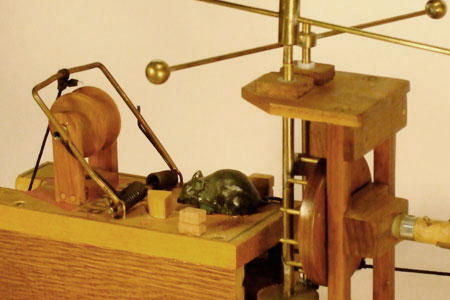   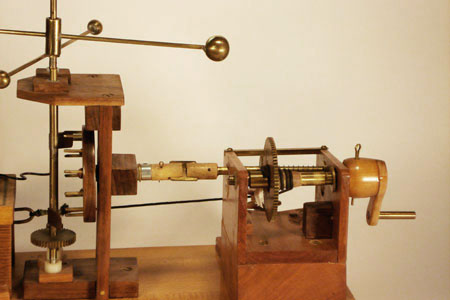  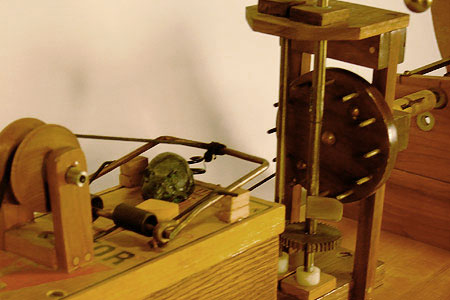  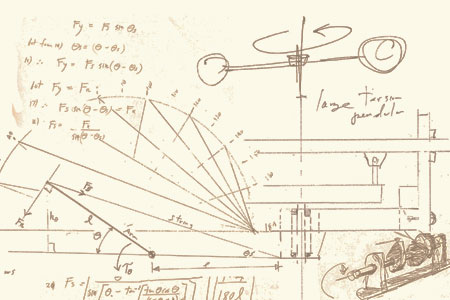        As with Victor Rat Trap No. 1, this machine is powered by one simple rat trap. A cord pulls the trap's spring back, and through an arrangement of pulleys, connects to a crank-wound gearbox on the right. The gearbox's output shaft is connected to a central verge-and-foliot escapement, which consists of a special type of gear plus two paddles affixed to a vertical shaft. (A verge-and-foliot is a device originally used to regulate the movement of large, medieval cathedral clocks.) On top of the vertical shaft are two brass arms with balls on each end. As the gear rotates, each tooth alternately engages each paddle, which causes the arms to oscillate back and forth. (The speed is largely determined by the length of the arm and the weight of the balls.) Due to the gearing, the two arms not only oscillate in different directions and amounts of rotation, a pleasing click-clack sound is also made. Although it's a close call, fear not, our rodent friend escapes harm by a whisker! |
||||||||||||||||||
© 2008-2026 Edmund Dohnert. All Rights Reserved -- Website Design by Lilana |
|||||||||||||||||||